A great art review of "Glass, Gilding and Grand Design: Art of Sasanian Iran" at the Asia Society by Holland Cotter of the NY Times. Excerpt:
"So, in cosmic terms, which are always basically earthly terms with spin, these images of domination through combat are political art, or more precisely, political advertising. What is the difference, after all, between a carved relief of an ancient king-of-king’s victory in a hunt and a press photograph of a modern leader declaring victory in a war?
Aesthetics is one difference, a big one. Most of the objects in the show — organized by Françoise Demange, chief curator of Asian antiquities at the Louvre, with Prudence O. Harper, curator emerita of ancient Near Eastern art at the Met, and Michael Chagnon, a curatorial consultant — are superbly beautiful in formal terms, beautiful enough to smooth over the reality that control through violence is a primary theme.
When we see comparable violence played out on television news, we are appalled; some people have ethical qualms about its omnipresence, in fictional form, in films. But in high art, we tend to put our scruples on hold and give it a pass, because of beauty, or rarity, or distance in time, or because we don’t know what we’re seeing, or because we just don’t want to acknowledge what is really there.
A large part of art’s allure is its ambiguity; you can take it as you wish, make of it what you will. This exhibition, with its luminous cruelties, is a reminder of that. But the ancient Sasanians were surely clear about what they were seeing in their imperial art. And in some sense the viewers who understand art as political advertising most directly today are iconoclasts, the suppressors and destroyers of art. They may be the only people for whom art actually does speak for itself, but for whom beauty truly is not enough.
So by all means see the rare and fabulous work at Asia Society, for the intense pleasure it gives and for the windows its opens onto history, present and past. But also see it for the hard questions it poses about the profoundly uninnocent nature of art — in particular imperial art, wherever it comes from — and the moral responsibility we should ask of it."
Monday, February 19, 2007
Wednesday, February 14, 2007
Books: Sacred Games by Vikram Chandra
A good review of Sacred Games by Vikram Chandra from the New Yorker - Bombay Noir by Pankaj Mishra. Excerpt:
"Playing the endless games of the Cold War, the characters of John le Carré’s novels didn’t think much differently, but Chandra is after something bigger. He has spoken in interviews of the possibility of taking the novel beyond the modern Western conceptions that have defined it, such as of the bourgeois individual who seeks self-knowledge and strives to establish his moral worth before his peers in a historically circumscribed society. Chandra believes that many Indians, pulled between tradition and modernity in a chaotically populous and poor country, have a less psychologically inhibited sense of self and a mythic, rather than a historical, sense of their place in the world.
The philosophical ambition of “Sacred Games” owes much to Bollywood films. To Chandra, these seem to capture the flexible nature of non-bourgeois self-perceptions, moving as they do from documentary naturalism to an epic mode of storytelling without getting bogged down in psychological realism. Dropping his characters into the tumult of recent national history, he occasionally seems to adopt a more conventional mode of novel-writing about India. But his stance, unlike Salman Rushdie’s or Rohinton Mistry’s, is of a calm Homeric objectivity, as he tries to realize afresh what seems, after many long novels from the subcontinent, a particularly Indian ambition to retool the novel as an epic form."
"Playing the endless games of the Cold War, the characters of John le Carré’s novels didn’t think much differently, but Chandra is after something bigger. He has spoken in interviews of the possibility of taking the novel beyond the modern Western conceptions that have defined it, such as of the bourgeois individual who seeks self-knowledge and strives to establish his moral worth before his peers in a historically circumscribed society. Chandra believes that many Indians, pulled between tradition and modernity in a chaotically populous and poor country, have a less psychologically inhibited sense of self and a mythic, rather than a historical, sense of their place in the world.
The philosophical ambition of “Sacred Games” owes much to Bollywood films. To Chandra, these seem to capture the flexible nature of non-bourgeois self-perceptions, moving as they do from documentary naturalism to an epic mode of storytelling without getting bogged down in psychological realism. Dropping his characters into the tumult of recent national history, he occasionally seems to adopt a more conventional mode of novel-writing about India. But his stance, unlike Salman Rushdie’s or Rohinton Mistry’s, is of a calm Homeric objectivity, as he tries to realize afresh what seems, after many long novels from the subcontinent, a particularly Indian ambition to retool the novel as an epic form."


Friday, February 09, 2007
Quote: What lies within
What lies behind us and what lies before us are tiny matters compared to what lies within us - Emerson
Thursday, February 08, 2007
Art: Jasper Johns

Slate has a great series of slide show art reviews. I like being able to see the art along with the words about it. Great use of technology to illuminate art.
This one on Jasper Johns is excellent: Targeting Jasper Johns: Is the artist overrated?
"The small drawings he did of targets are a revelation; no larger than 6 inches square, they are lively, intense, and full of mystery. Unlike the primary colors of the painted targets, the drawings are monochrome: gray, green, white. They look like mandalas, or rubbings of Cambodian temple fragments. The target is almost invisible, pulsing in and out of focus as one looks at, or into, the image. There's a Zen feel to it, as though you yourself are dissolving into the target. "The hits on the target are only the outward proof and confirmation of your purposelessness at its highest, of your egolessness, your self-abandonment," the master tells his pupil in Eugen Herrigel's Zen in the Art of Archery. Close your eyes. See the target. The target is within you."
Tuesday, February 06, 2007

Monday, February 05, 2007
Art: Martin Ramirez - outsider
A good article from the New Yorker - Mystery Train: Martin Ramirez, outsider by Peter Schjedahl. An excerpt:
"Ramírez’s art is less rich in formal invention than Wölfli’s and in poetic resonance than Darger’s, but it is more stylistically resolved and emotionally concentrated. He has in common with them an extravagant giftedness. All would have been stars in any art school, had they attended one. That they eluded contact with institutions of fine art owes something to personal disarray and something to chance, in a ratio impossible to gauge. It’s a small thing, which makes them hard cases, exceptions proving the existence of a rule—that art, to be recognized as such, requires grounding in both individual biography and common culture. What can we do with and about the rush of pleasure and enchantment that the unlicensed genius of a Ramírez affords? I recommend taking it as a lesson in the limits of how we know what we think we know. Unable to regard such work as part of art’s history, we may still have it be part of our own."
"Ramírez’s art is less rich in formal invention than Wölfli’s and in poetic resonance than Darger’s, but it is more stylistically resolved and emotionally concentrated. He has in common with them an extravagant giftedness. All would have been stars in any art school, had they attended one. That they eluded contact with institutions of fine art owes something to personal disarray and something to chance, in a ratio impossible to gauge. It’s a small thing, which makes them hard cases, exceptions proving the existence of a rule—that art, to be recognized as such, requires grounding in both individual biography and common culture. What can we do with and about the rush of pleasure and enchantment that the unlicensed genius of a Ramírez affords? I recommend taking it as a lesson in the limits of how we know what we think we know. Unable to regard such work as part of art’s history, we may still have it be part of our own."
Thursday, February 01, 2007
Quote: The unfamiliar
There is wisdom in turning as often as possible from the familiar to the unfamiliar: it keeps the mind nimble, it kills prejudice, and it fosters humor. -George Santayana, philosopher (1863-1952)
Friday, January 26, 2007
Zeitgeist: Smartest .orgs online
Good things to learn from these 59 .org sites.
"These charities were chosen for their excellence in online storytelling and collaboration with their donors."
"These charities were chosen for their excellence in online storytelling and collaboration with their donors."
Tuesday, January 23, 2007


Monday, November 20, 2006
Quote: Warmth
Politeness is to human nature what warmth is to wax. -Arthur Schopenhauer, philosopher (1788-1860)

Thursday, November 16, 2006
Art: The Art of Pricing Great Art
A good Economix column from the NY Times by David Leonhardt: The Art of Pricing Great Art.
Excerpt:
For the last five years, though, a man named David W. Galenson, an art lover, modest collector and tenured professor of economics at the University of Chicago, has been trying to change this. He has developed something approaching a unified theory of art, which hasn’t won him many fans in the art world but does a surprisingly good job of explaining the relative value of the world’s great paintings.
---
So he began collecting data on the sale price of works by Warhol, Jackson Pollock and other American artists, and he discovered a pattern. Most of them produced their most valuable work either very early in their career, like Warhol, or very late, like Pollock. When he expanded his research to European painters, he found the same pattern.
Not only that, but the two groups tended to approach art, and to talk about it, in strikingly different ways. The young geniuses, like Gauguin, Picasso and Van Gogh, were conceptual innovators whose paintings broke sharply from previous work. They typically had a precise goal in mind when they started a piece and didn’t need long to finish it. “Above all, don’t sweat over a painting,” Gauguin once told a friend. “A great sentiment can be rendered immediately.”
The late bloomers, on the other hand, arrived at their innovations gradually, through trial and error, making their major contributions late in life. They painted the same subject again and again, experimenting on the canvas, often reluctant to say that a painting was finished. Consider that Cézanne, who did his most valuable and celebrated work in his 60s, signed few of his paintings.
Mr. Galenson has extended the theory to novelists, poets and beyond, arguing that most creative people fall on one end or the other of the spectrum, and he has earned a fair bit of attention. Malcolm Gladwell, in a speech at Columbia University, described “Old Masters and Young Geniuses,” which Mr. Galenson published this year, as “a really wonderful book.” Wired magazine recently profiled him under the headline, “What Kind of Genius Are You?”
Excerpt:
For the last five years, though, a man named David W. Galenson, an art lover, modest collector and tenured professor of economics at the University of Chicago, has been trying to change this. He has developed something approaching a unified theory of art, which hasn’t won him many fans in the art world but does a surprisingly good job of explaining the relative value of the world’s great paintings.
---
So he began collecting data on the sale price of works by Warhol, Jackson Pollock and other American artists, and he discovered a pattern. Most of them produced their most valuable work either very early in their career, like Warhol, or very late, like Pollock. When he expanded his research to European painters, he found the same pattern.
Not only that, but the two groups tended to approach art, and to talk about it, in strikingly different ways. The young geniuses, like Gauguin, Picasso and Van Gogh, were conceptual innovators whose paintings broke sharply from previous work. They typically had a precise goal in mind when they started a piece and didn’t need long to finish it. “Above all, don’t sweat over a painting,” Gauguin once told a friend. “A great sentiment can be rendered immediately.”
The late bloomers, on the other hand, arrived at their innovations gradually, through trial and error, making their major contributions late in life. They painted the same subject again and again, experimenting on the canvas, often reluctant to say that a painting was finished. Consider that Cézanne, who did his most valuable and celebrated work in his 60s, signed few of his paintings.
Mr. Galenson has extended the theory to novelists, poets and beyond, arguing that most creative people fall on one end or the other of the spectrum, and he has earned a fair bit of attention. Malcolm Gladwell, in a speech at Columbia University, described “Old Masters and Young Geniuses,” which Mr. Galenson published this year, as “a really wonderful book.” Wired magazine recently profiled him under the headline, “What Kind of Genius Are You?”
Monday, November 13, 2006
Quote: Libraries and bicycles
Hear hear!
"My two favorite things in life are libraries and bicycles. They both move people forward without wasting anything. The perfect day: riding a bike to the library." -Peter Golkin, museum spokesman (1966- )
"My two favorite things in life are libraries and bicycles. They both move people forward without wasting anything. The perfect day: riding a bike to the library." -Peter Golkin, museum spokesman (1966- )
Tuesday, November 07, 2006
Music: Live - The Rapture
The Rapture @ Emo's: the best show I have seen this year. Not a single person was standing still. WOW!
Sunday, November 05, 2006
Art: Artwork as one possible solution
An excerpt from an interview of Gabriel Perez-Barriero by Luis Camnitzer:
"The reason I invited you [Luis Camnitzer to the 6th Mercosur Biennial] was that I’ve been following your ideas in art education and was drawn to your belief that art is education and education is art. I also like how you have challenged the idea that education consists of the transmission of data from “specialist” to “novice” and how you have developed a series of activities that takes the artist’s intention and sees the artwork as just one possible solution to a particular problem, but that the problem is larger than the work and requires or demands a continuous thought process on the part of the viewer."
"The reason I invited you [Luis Camnitzer to the 6th Mercosur Biennial] was that I’ve been following your ideas in art education and was drawn to your belief that art is education and education is art. I also like how you have challenged the idea that education consists of the transmission of data from “specialist” to “novice” and how you have developed a series of activities that takes the artist’s intention and sees the artwork as just one possible solution to a particular problem, but that the problem is larger than the work and requires or demands a continuous thought process on the part of the viewer."
Wednesday, November 01, 2006
Art: LCRA Mural
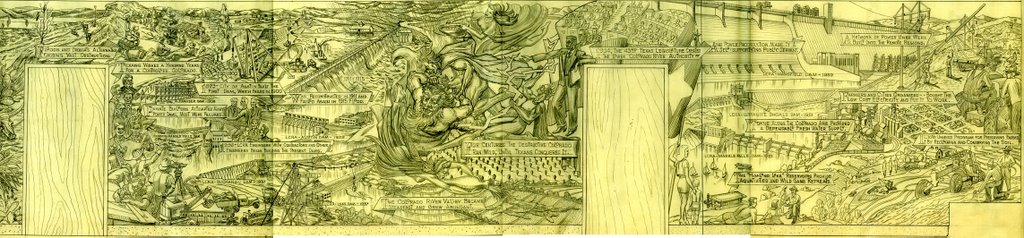 This mural is at the Mansfield Dam. It was done (in the 50s?) by Art Anderson - an engineer at LCRA.
Tuesday, October 17, 2006
Music: New CD - The Longcut
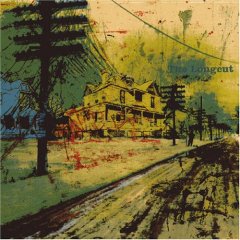
The Longcut EP - Brit band, driving rhythm section like a galloping horse, piercing guitars and vocals, stretched out songs.

Friday, October 13, 2006
Technology: Participation inequality on the web
From Jakob Nielsen's latest AlertBox newsletter: Participation Inequality: Encouraging More Users to Contribute
"In most online communities, 90% of users are lurkers who never contribute, 9% of users contribute a little, and 1% of users account for almost all the action."
"In most online communities, 90% of users are lurkers who never contribute, 9% of users contribute a little, and 1% of users account for almost all the action."
Monday, October 02, 2006
Art: A Turner Prize juror's experience
An insightful article about the world of contemporary art - How I Suffered For Art's Sake - about Lynn Barber's experience as a Turner Prize juror. She is a journalist for The Gaurdian.
Excerpt:
"I hate to say it, but my year as a Turner juror has seriously dampened, though I hope not extinguished, my enthusiasm for contemporary art. There is so much bad work around, so much that is derivative, half-baked or banal, you can't believe that galleries would show it. I think what happened is that the huge success of the YBAs in the Nineties has created a peculiar post-boom glut whereby there are now more galleries looking for young artists than worthwhile artists to fill them."
Excerpt:
"I hate to say it, but my year as a Turner juror has seriously dampened, though I hope not extinguished, my enthusiasm for contemporary art. There is so much bad work around, so much that is derivative, half-baked or banal, you can't believe that galleries would show it. I think what happened is that the huge success of the YBAs in the Nineties has created a peculiar post-boom glut whereby there are now more galleries looking for young artists than worthwhile artists to fill them."
Subscribe to:
Posts (Atom)